

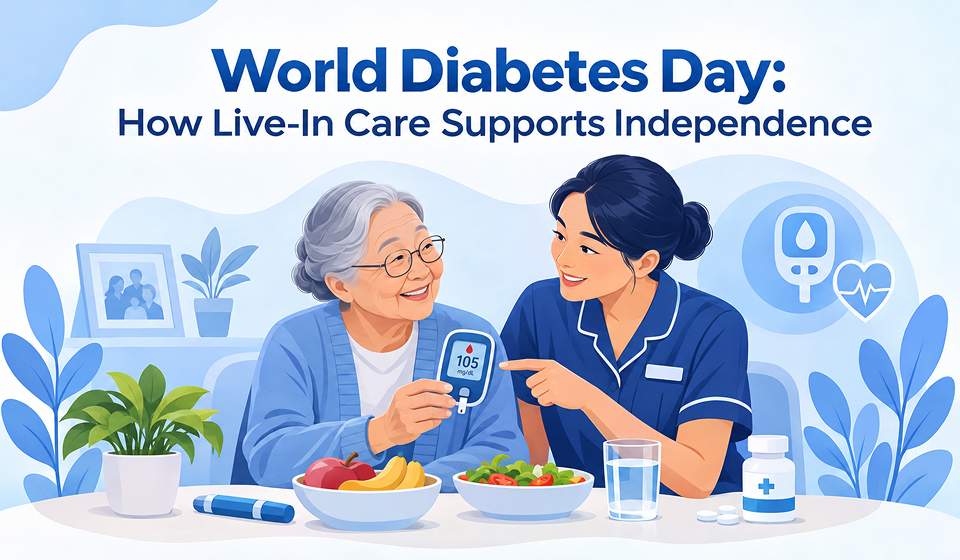
Living with diabetes does not necessarily mean giving up the independence and comfort of home. However, as health needs change, individuals and their families may wonder whether managing the condition without regular assistance is still practical.
World Diabetes Day, observed on 14 November, highlights the importance of appropriate care and support for people with diabetes. For those who need help with everyday responsibilities, a live-in carer can provide personalised assistance while respecting individual choices and routines. Understanding the support available and when it may be needed can help families choose the right level of care.
How can a live-in carer assist with everyday diabetes care?
The type of diabetes care required varies depending on an individual’s health, treatment requirements, and ability to manage daily tasks. Live-in carers provide assistance across several aspects of diabetes management and everyday life.
Blood glucose monitoring and medication support
For individuals who need regular blood glucose checks, a trained carer can help with monitoring equipment and maintain a record of readings. If readings fall outside the recommended range, carers can follow established procedures and alert healthcare professionals when necessary.
Medication support includes timely reminders and assistance with maintaining prescribed medication schedules. For individuals who require insulin, carers can also provide support with insulin routines, where appropriate and within their training and care plan.
Meal planning and nutritional support
Maintaining a balanced diet is an important part of diabetes management, particularly for individuals who need assistance with preparing meals and following dietary recommendations.
Support includes grocery shopping, meal planning, and preparing food that meets the person’s nutritional needs and preferences. Carers can also encourage regular mealtimes and adequate hydration while involving individuals in their food choices.

Personal care and daily activities
Assistance with everyday activities can include bathing, dressing, moving safely around the home, and completing household tasks. The level of help is adjusted to the person’s abilities, encouraging them to continue performing activities they can safely manage.
Carers can also encourage gentle walking or exercises recommended by healthcare professionals, helping individuals stay active according to their abilities.
Maintaining personal choice and social connections
Receiving live-in care allows individuals to continue making decisions about their everyday lives. They can follow familiar routines, choose how they spend their time, and remain involved in activities and hobbies they enjoy.
Carers also provide companionship and support with social activities, helping individuals maintain relationships with family, friends, and their local community while respecting their personal preferences.
When should families consider live-in care for someone with diabetes?
Knowing when to arrange live-in care can be difficult, especially when a loved one’s needs change gradually. The following signs may indicate that additional support could be beneficial:
- Difficulty managing treatment routines: Frequently forgetting medication, struggling with blood glucose monitoring, or needing help with prescribed treatment.
- Repeated blood glucose concerns: Experiencing frequent episodes of low or high blood sugar that are difficult to recognise or manage independently.
- Increasing personal care needs: Requiring regular assistance with bathing, dressing, preparing meals, or maintaining personal hygiene.
- Concerns about safety: Experiencing falls, confusion, reduced mobility, or other difficulties that affect everyday safety.
- Growing reliance on family members: Depending on relatives for frequent assistance that they may find difficult to provide consistently.
Before arranging live-in care, families should discuss the person’s circumstances with their healthcare team and a professional care provider. An individual assessment can help determine whether live-in care, visiting care, or another arrangement would provide the most appropriate level of support.
How can AUM Care Group support people living with diabetes?
At AUM Care Group, we provide personalised diabetes care services to help individuals manage their condition while continuing to live comfortably at home. Our carers are trained and supervised by NHS-experienced nurses, with support tailored to each person’s health requirements and daily routines.
We begin by understanding the individual’s needs through a consultation and home assessment. Families can meet and approve their carer before support begins, while regular care reviews help ensure that arrangements remain appropriate as health needs change.
With options including live-in care, full-day assistance, flexible support, and short-term care, we aim to provide arrangements that respect personal preferences, promote independence, and offer reassurance to families.
Finding the right balance between independence and support
Living independently with diabetes is possible for many people, but the level of assistance required depends on individual circumstances. The right care arrangement should address health and safety needs while allowing individuals to remain involved in everyday decisions.
For families, the priority is recognising when additional help may be beneficial and choosing support that respects personal preferences, abilities, and wellbeing. If you are considering live-in care for yourself or a loved one, contact us to discuss your care needs and explore suitable support options.

Frequently asked questions
Can older adults with diabetes remain independent as their health needs change?
Yes, some older adults can maintain independence with suitable assistance. Regular care assessments help determine whether their current support remains appropriate.
Is live-in care suitable for someone with both diabetes and dementia?
Live-in care may be suitable for individuals managing both conditions. A professional assessment can help establish their care requirements and appropriate support.
How can families help a loved one with diabetes maintain independence?
Families can encourage personal choices, support healthy routines, attend healthcare appointments when appropriate, and arrange additional assistance as care needs change.
Is live-in care necessary for everyone who needs help managing diabetes?
No, live-in care is not always necessary. Some individuals may benefit from scheduled home care visits or occasional assistance instead.
Can live-in care be adapted as diabetes care needs change?
Yes, care arrangements can be reviewed and adjusted according to changing medical requirements, professional recommendations, and the level of assistance needed at home.