

Halloween is a time for family traditions, seasonal decorations, and shared celebrations. For someone living with dementia, being part of these occasions can still bring enjoyment and a sense of connection, especially when activities reflect their interests and preferences.
With a little thought and preparation, families can create a Halloween experience that feels familiar, relaxed, and inclusive. This guide explores practical ways to make Halloween more comfortable for someone living with dementia while helping them enjoy the occasion at their own pace.
Why can Halloween be challenging for someone living with dementia?
Dementia can affect how a person understands and responds to their surroundings. As a result, certain aspects of Halloween may feel confusing or unsettling.
Common Halloween-related challenges include:
- Unfamiliar decorations: Masks, skeletons, and other frightening displays may be confusing or upsetting, particularly if the person has difficulty recognising what they represent.
- Loud or unexpected noises: Doorbells, excited children, spooky sound effects, and sudden shouting may cause discomfort or anxiety.
- Unrecognisable faces: Costumes and masks can make familiar people harder to recognise, potentially causing uncertainty or fear.
- Changes to familiar routines: Halloween parties, additional visitors, and activities outside the usual schedule may leave someone feeling unsettled.
- Increased sensory stimulation: Flashing lights, busy surroundings, and multiple conversations can become overwhelming.
Understanding these potential difficulties allows families to make thoughtful adjustments without excluding their loved one from celebrations.
Practical ways to make Halloween dementia-friendly
The following practical tips can help families adapt Halloween celebrations to suit their loved one’s needs and preferences.
Keep Halloween decorations and surroundings simple
Choose gentle decorations, such as small pumpkins, autumn leaves, and seasonal ornaments, rather than frightening masks or realistic skeletons. Limit decorations to selected areas of the home instead of changing the appearance of every room.
Keep background noise at a comfortable level, avoid flashing lights, and maintain adequate lighting throughout the home. If family members wish to wear costumes, choose simple outfits that leave their faces visible.
Make sure decorations do not obstruct doorways, hallways, or walking routes, particularly if your loved one uses a mobility aid.
Maintain familiar daily routines
Keep regular mealtimes, medication schedules, personal care routines, and bedtime arrangements as consistent as possible.
Plan Halloween activities around the person’s usual schedule rather than changing their routine to accommodate celebrations. For example, if they generally feel more alert in the morning, this may be a better time for a family activity than the evening.
Allow sufficient time for everyday tasks, and avoid scheduling too many commitments in one day.
Manage trick-or-treaters and other visitors
Decide beforehand whether your household will welcome trick-or-treaters. If frequent doorbell ringing is likely to cause distress, place a polite sign outside asking visitors not to knock or ring.
You could also arrange for another family member to answer the door or distribute sweets outside, away from the main entrance.
Let relatives and friends know about suitable visiting times, and consider keeping gatherings small. Where possible, introduce visitors individually and explain who they are without putting pressure on your loved one to recognise them.
Choose gentle and meaningful Halloween activities
Select activities that suit your loved one’s abilities, interests, and previous experiences. Simple activities can offer opportunities to spend time together without requiring complicated instructions or lengthy preparation.
Some suitable options include:
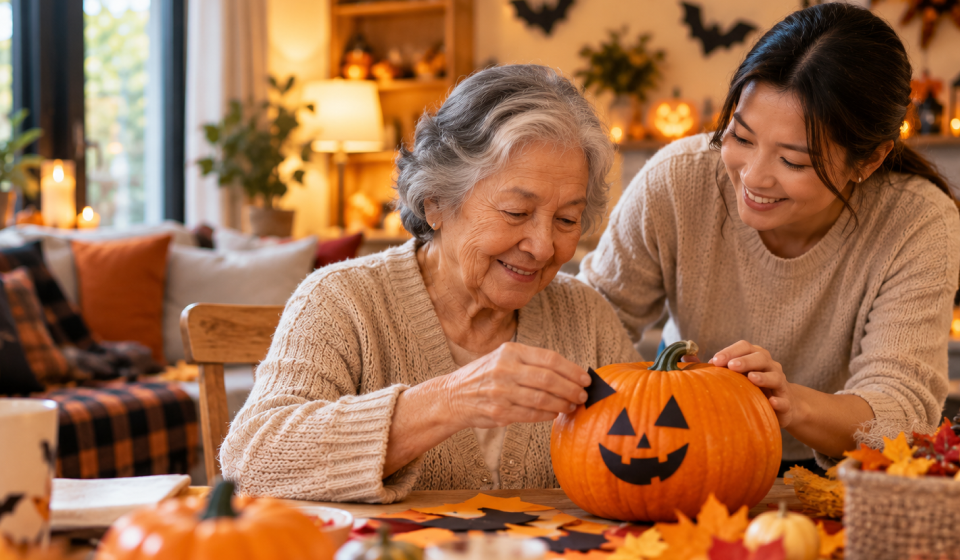
- Pumpkin decorating: Use stickers or other easy-to-handle materials to decorate pumpkins without sharp tools.
- Autumn crafts: Make simple seasonal decorations using colourful paper or leaves.
- Favourite music: Listen to familiar songs or enjoy singing together.
- Seasonal baking: Involve your loved one in manageable tasks, such as mixing ingredients or decorating biscuits, with appropriate supervision.
- Family photographs: Look through photographs from previous celebrations and enjoy any conversations they inspire.
Allow the person to decide how much they would like to participate, and offer assistance without taking over tasks they can manage independently.
Recognise discomfort and offer reassurance
Observe how your loved one responds during Halloween celebrations. Restlessness, withdrawal, agitation, or difficulty expressing themselves may indicate that they are feeling uncomfortable.
If this happens, remain calm, acknowledge their feelings, and speak in a gentle, reassuring manner. Avoid arguing, repeatedly correcting them, or insisting that they continue participating.
If they would like a break, help them move to a familiar, quiet area where they can relax. Offer simple choices, listen to their responses, and respect their decision if they no longer wish to take part.
Remember that each person’s experience of dementia is different, and their preferences may change over time.
How can professional dementia care help during seasonal celebrations?
Supporting someone living with dementia during seasonal events can require additional planning, particularly when families are balancing everyday care responsibilities with celebrations.
Professional dementia care can help individuals maintain familiar routines, receive appropriate assistance, and continue enjoying activities that are meaningful to them.
Depending on their individual care plan, this support may include assistance with personal care, mobility, meals, companionship, and everyday activities. Carers can also provide gentle reassurance and encourage participation in suitable seasonal activities while respecting the person’s wishes.
By taking an individual approach, professional carers can help families maintain consistency and make celebrations more manageable without compromising the person’s comfort or wellbeing.

Conclusion
Halloween can be a meaningful occasion for someone living with dementia when celebrations are shaped around their comfort, interests, and individual needs. Keeping familiar routines, choosing gentle activities, and offering reassurance can help families create an environment where their loved one feels safe, respected, and included.
At Aum Care Group, we understand the importance of providing care that respects each individual’s personality, preferences, and daily life. If your loved one needs additional support at home, contact us to learn how our personalised dementia care services can help.
Frequently asked questions
Can Halloween decorations cause confusion for someone with dementia?
Yes, unfamiliar or frightening decorations may cause confusion or distress. Choose simple, familiar decorations, maintain good lighting, and avoid sudden changes to surroundings.
Should someone living with dementia participate in Halloween celebrations?
Yes, if they enjoy participating. Adapt celebrations to their abilities, interests, and preferences, ensuring they feel comfortable and never pressured to join activities.
What Halloween activities are suitable for someone living with dementia?
Simple activities such as pumpkin decorating, autumn crafts, listening to favourite music, and looking through family photographs can encourage enjoyable, meaningful engagement.
How can you help someone with dementia who becomes frightened on Halloween?
Stay calm, offer gentle reassurance, remove distressing decorations or noises, and guide them towards a quiet, familiar space where they can feel comfortable.
Is it better to avoid trick-or-treaters when caring for someone with dementia?
It depends on individual preferences. If unexpected visitors cause distress, consider displaying a polite sign or asking another family member to answer the door.